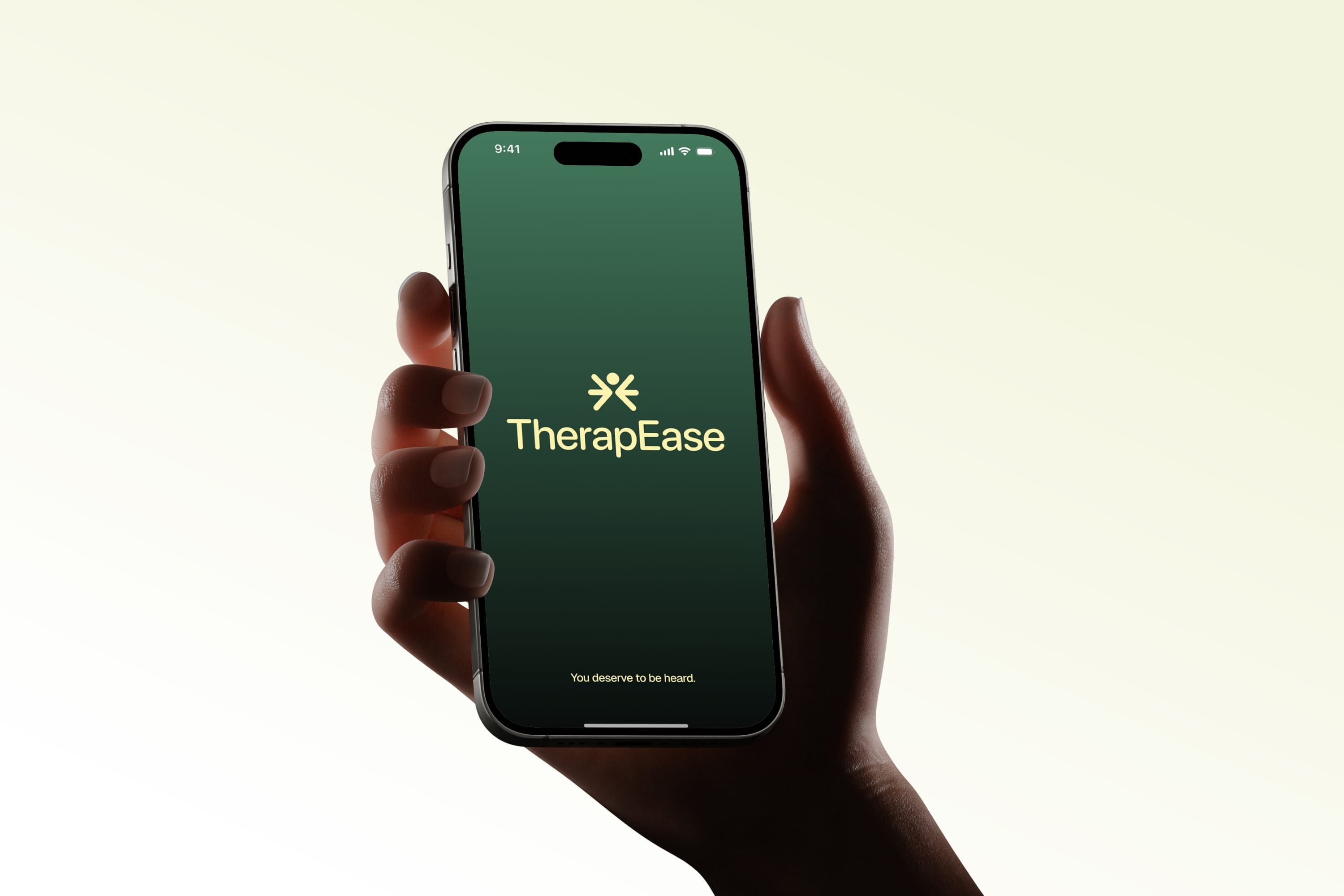
TherapEase
Designing a culturally aware mental health platform for Australia.
Client:
Concept / Independent Design Project
Year:
2023
Type:
UI/UX Design
Overview
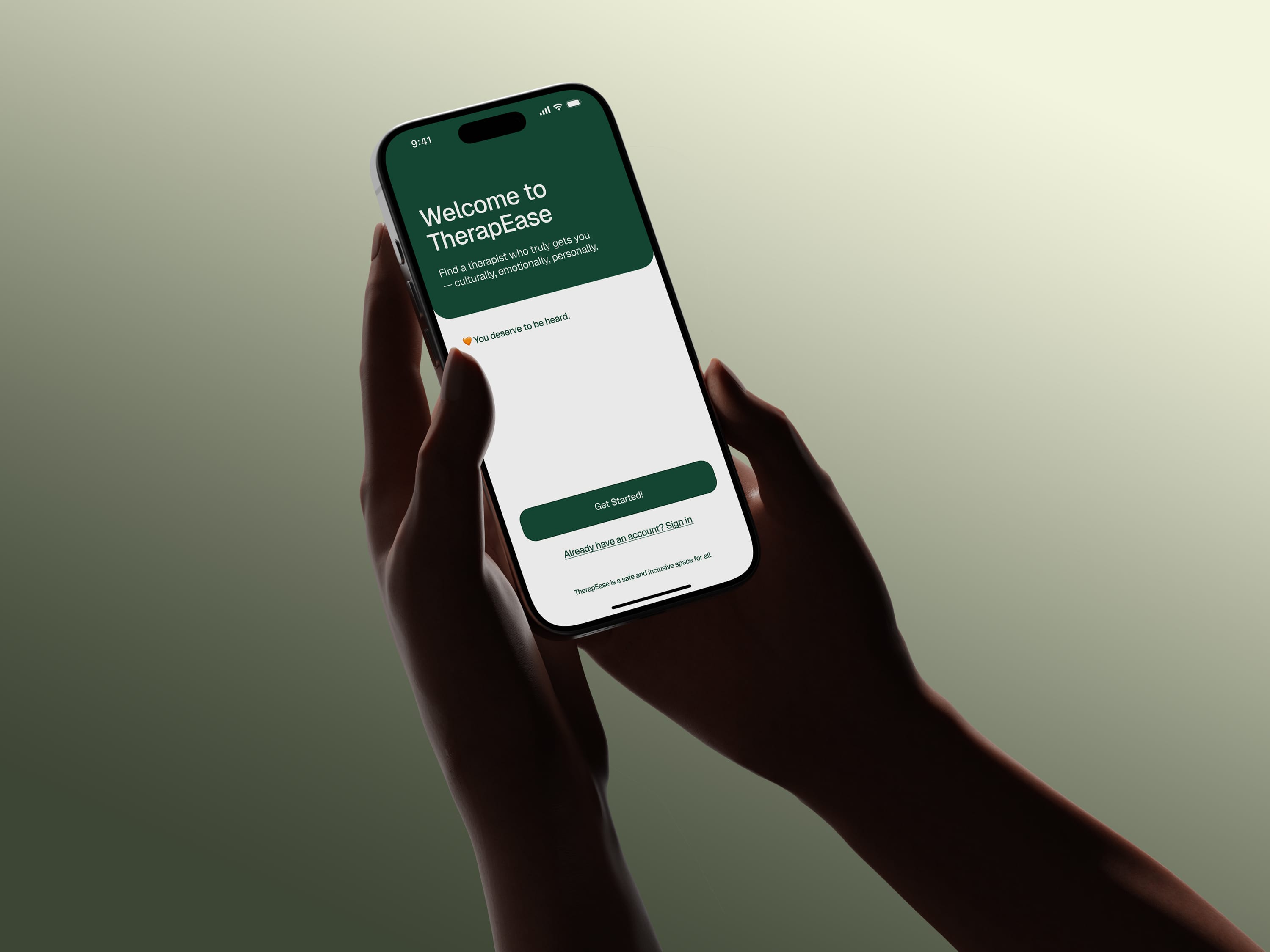
Finding a therapist is not just about availability. It is about feeling understood. TherapEase is a mobile experience designed to help users, especially from culturally diverse backgrounds, connect with therapists who align with their language, identity, and emotional needs. Instead of overwhelming users with choices, the platform guides them toward the right match and builds trust before the first session begins.
Understanding the Problem
Mental health accessibility is improving in Australia, but relevance and relatability remain major gaps.
Many users from culturally diverse backgrounds face:
Difficulty expressing emotions in a second language
Fear of being misunderstood
Uncertainty when evaluating therapist compatibility
1 in 5
Australians experience mental health conditions each year
32%
Indigenous Australians avoiding healthcare due to cultural barriers
The issue is not access to therapists. It is the inability to identify the right one with confidence.

Approach
The project focused on shifting from feature-driven design to decision-driven design. The strategy was to shift from “Browse therapists” To “Be guided to someone who feels right”
Research Methods
12 User interviews
Semi-structured interviews with participants from culturally diverse backgrounds in Australia
5 Therapist interviews
To understand matching, intake, and communication challenges
Competitive analysis
Secondary research
Key Insights from Research
Users were presented with many therapist options but lacked clear ways to evaluate.
Users could not easily determine cultural compatibility with therapist.
Many participants did not know how to choose a therapist.
Users only felt confident after attending sessions with their therapists.
Clarity Statement
Users are not trying to find the best therapist. They are trying to avoid the wrong one.
Solution
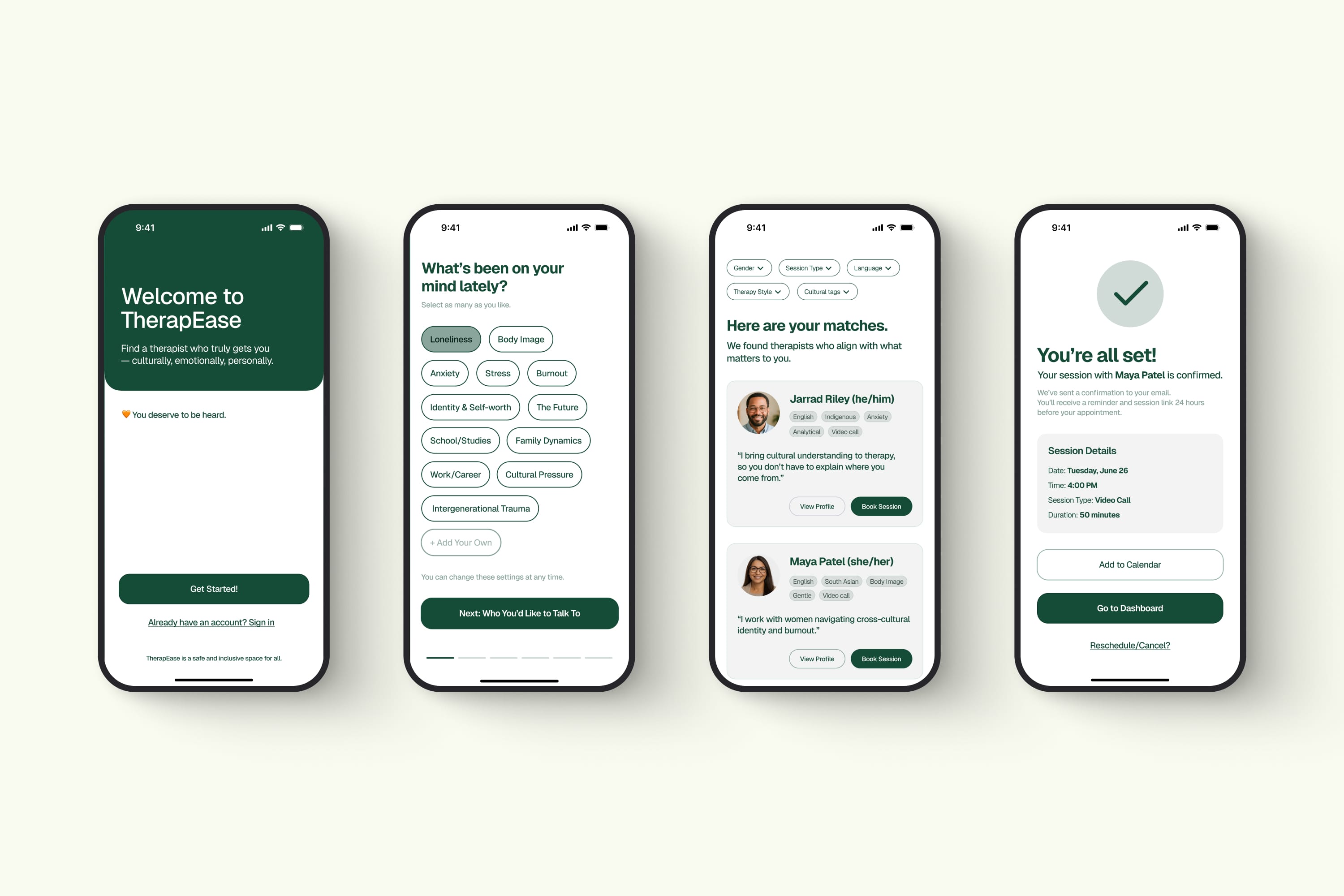
TherapEase was designed as a progressive journey from uncertainty to confidence.
Guided Onboarding
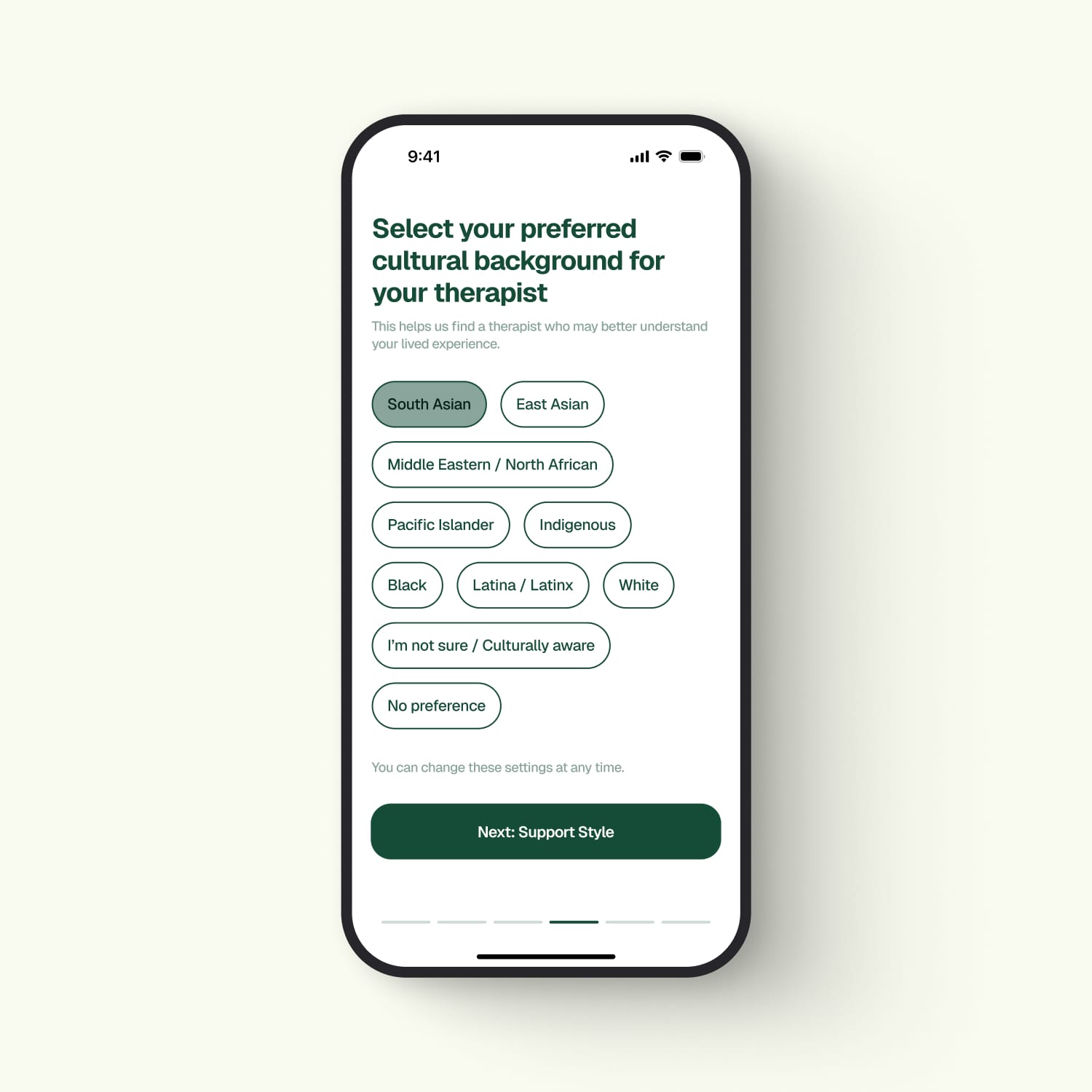
The experience begins with a calm, structured onboarding flow designed to understand the user before asking them to make any decisions.
Curated Matching Experience
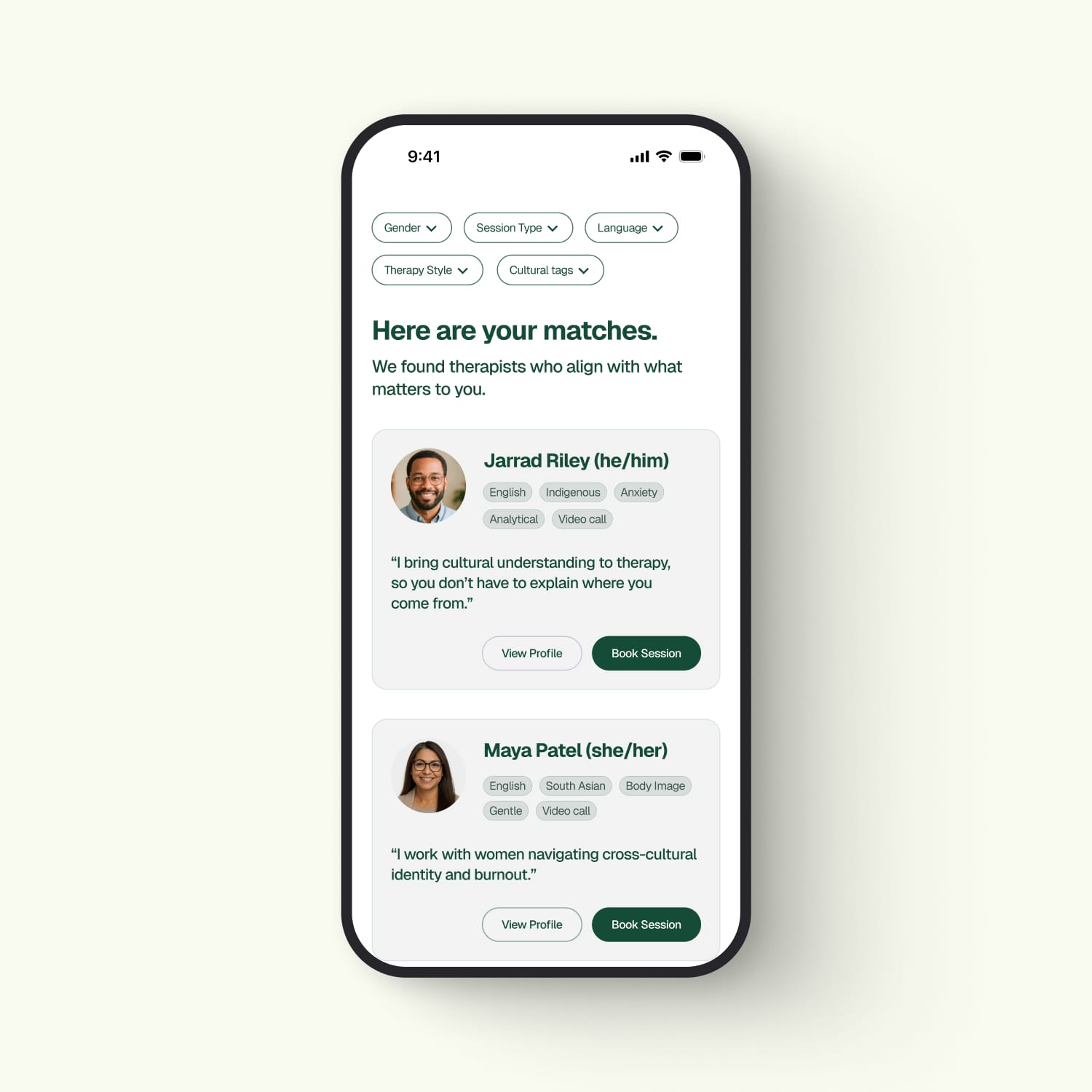
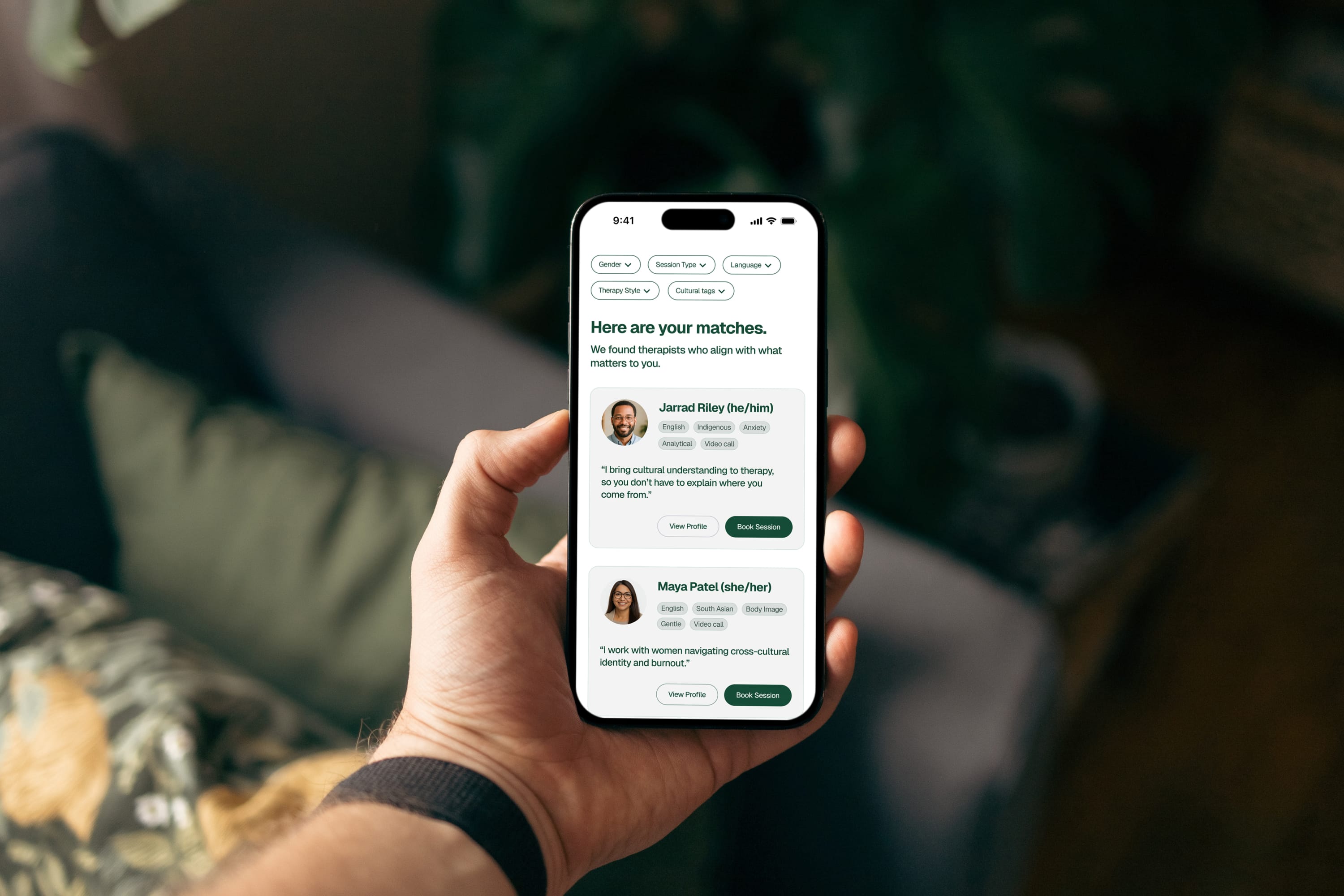
Rather than presenting users with an extensive list of therapists, the platform delivers a small set of carefully selected matches.
3. Booking Flexibility
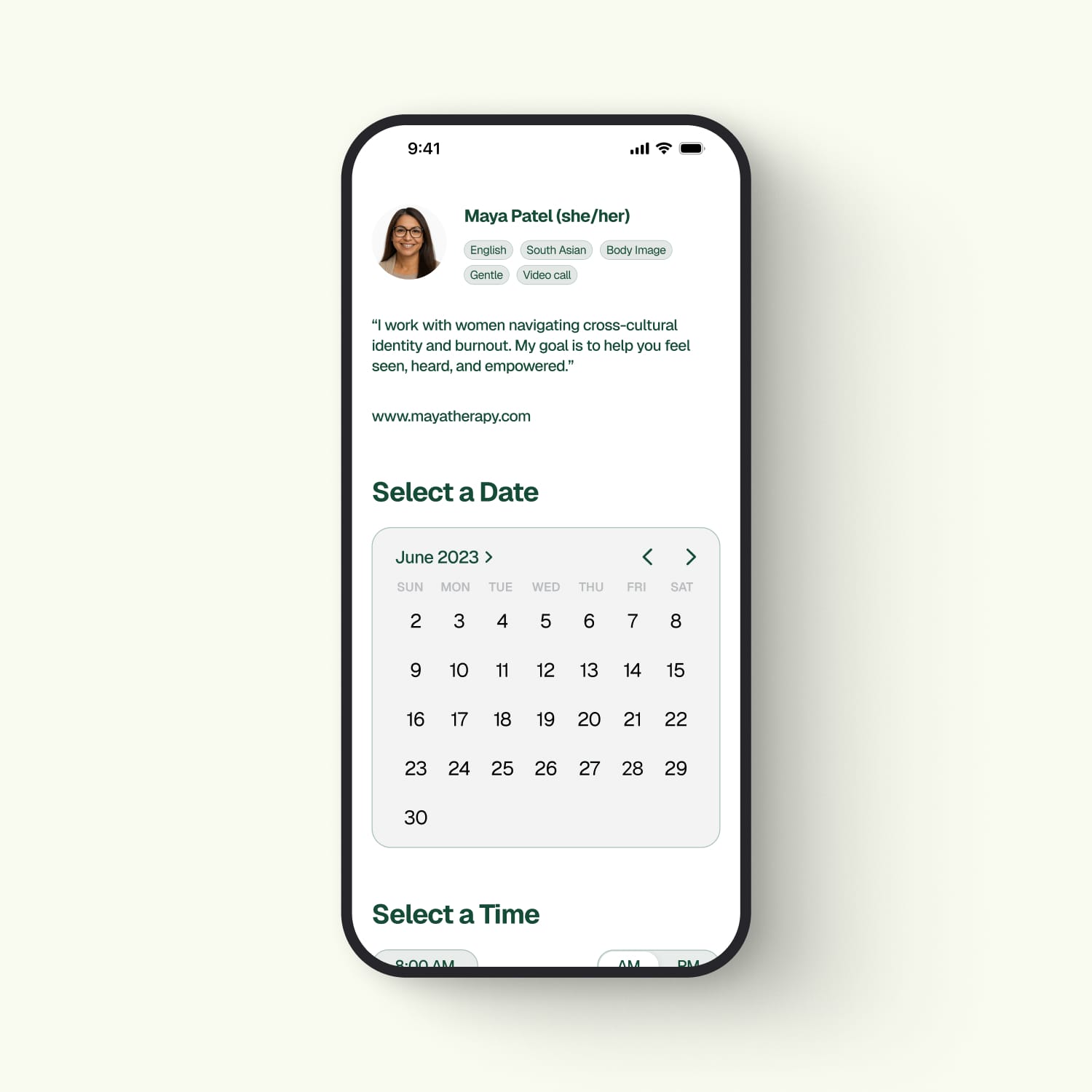
The booking experience is designed to feel simple, flexible, and low-pressure with easy scheduling or adjustments, acknowledging that users may feel uncertain or hesitant before committing.
4. Setting Expectations Before the First Session
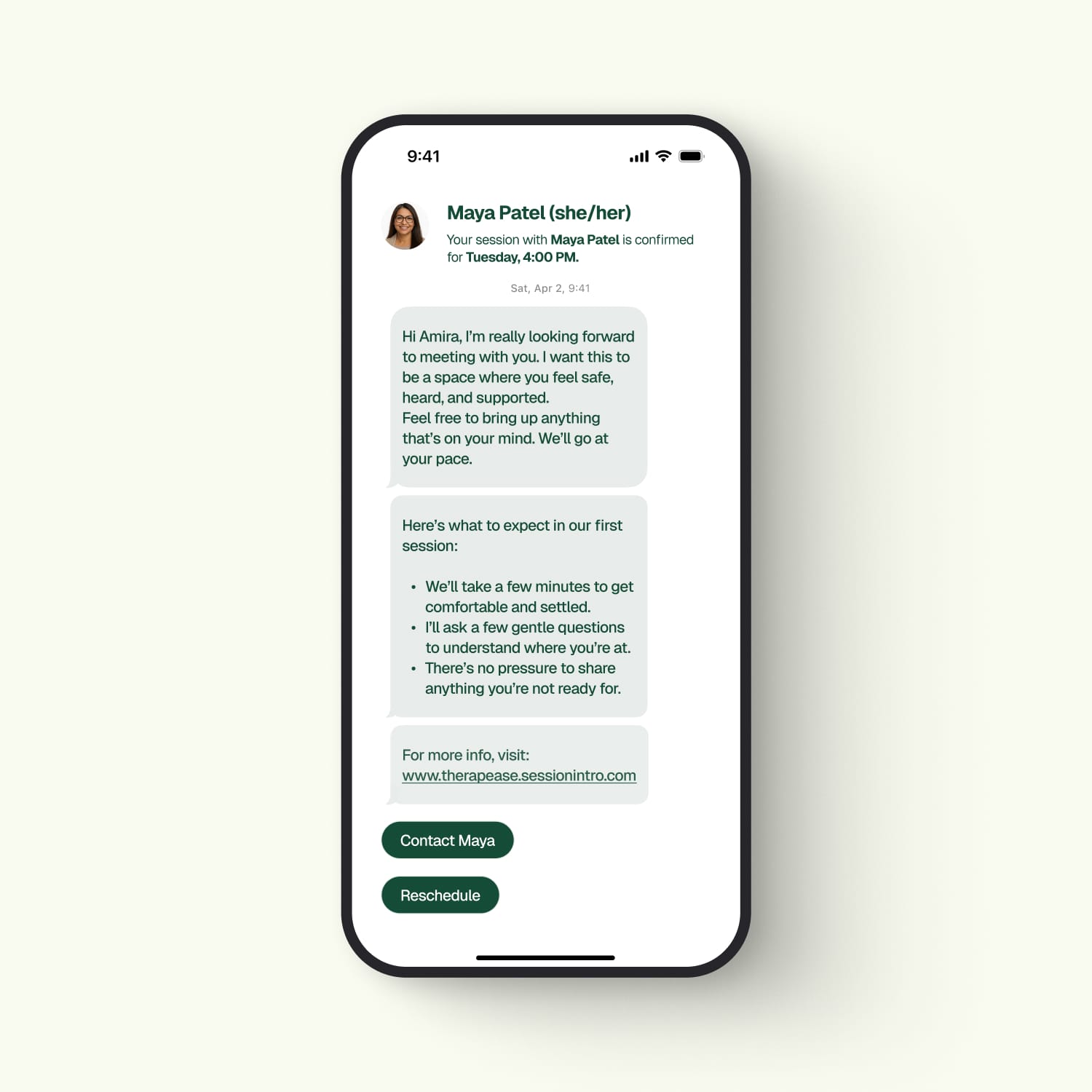
The platform introduces a pre-session communication layer where users receive a message from their therapist. This message sets the tone for the upcoming session and helps reduce uncertainty.
Closing Thoughts
This project changed how I think about designing for mental health. This project highlighted that accessibility is not just about making services available, but making them feel approachable. Designing for mental health requires careful consideration of emotional states, cultural context, and user hesitation.